Cologne Scanner: Identify a Bottle From a Photo
Upload a clear bottle photo to find likely fragrance names, concentrations, and matching editions.


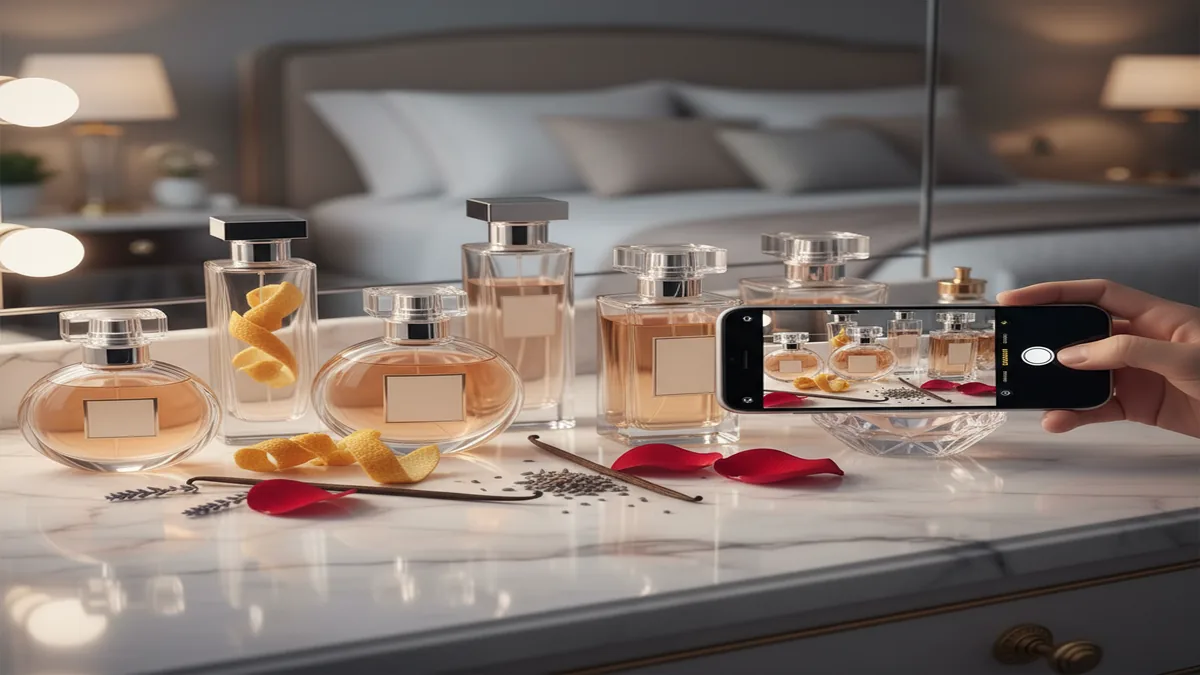
What is a cologne scanner?
A cologne scanner is a visual search tool that analyzes a bottle or packaging photo and suggests matching fragrances. It may compare visible text, logos, bottle shape, cap design, colors, and label placement with known products. Despite the name, it can often recognize perfume, eau de parfum, eau de toilette, and eau de cologne.
Results are best treated as leads rather than proof. Similar flankers may share nearly identical bottles, packaging can change between years, and glare can hide decisive details. A scan also cannot smell the liquid or confirm its composition. Verify any suggested match using the full product name, concentration, bottle size, batch markings, and retailer or manufacturer information.
How to take a photo for better identification
Use bright, even lighting and place the bottle against a plain background. Keep the camera parallel to the label so text remains readable, and avoid digital zoom or filters that alter colors. If the first scan is inconclusive, photograph several views.
- Capture the front label and entire bottle outline.
- Photograph the base, where size, concentration, and batch details may appear.
- Include the box front, back, and barcode when available.
- Remove fingerprints and reduce reflections without obscuring the glass.
- Take a close-up of distinctive cap, emblem, or atomizer details.
Crop away unrelated objects, but do not cut off the bottle edges or printed wording needed for comparison.
How scanners compare fragrance bottles
A scanner typically combines text recognition with visual similarity. Readable words can reveal the fragrance house, line, edition, concentration, or volume. Image features such as silhouette, cap geometry, typography, decorative patterns, and liquid color help narrow the candidates. A system may then rank several visually similar products rather than returning one certain answer.
Concentration labels provide useful context but are not rigid product categories. Typical ranges are about 20–30% fragrance oil for parfum or extrait, 15–20% for eau de parfum, 5–15% for eau de toilette, and 2–6% for eau de cologne. Formulas vary, and the word cologne is also commonly used in the US as a broad term for men’s fragrance.
What a bottle photo cannot prove
A photo cannot establish authenticity, safety, storage history, formula, or remaining shelf life. Counterfeit packaging may reproduce visible details, while genuine bottles can differ because of regional labeling, limited editions, reformulations, tester packaging, or production changes. Batch codes can support further research, but a visible or valid-looking code is not conclusive proof.
An image also cannot reliably distinguish liquids that have been refilled, diluted, oxidized, or exposed to heat and sunlight. Color is especially unreliable because lighting, camera processing, bottle tint, and natural aging can change its appearance. For higher-risk purchases, inspect the seller’s provenance, packaging quality, atomizer, seals, receipt, and return policy. If irritation or contamination is suspected, do not apply the fragrance based on a scan result.
How to verify a scanner result
Start with the scanner’s closest candidates and compare details systematically. Match the exact wording rather than relying on bottle shape alone, because one fragrance line may contain multiple concentrations and flankers. Pay attention to small qualifiers such as intense, sport, elixir, limited edition, or a release year.
- Confirm the brand and complete fragrance name.
- Check whether the label says parfum, EDP, EDT, or EDC.
- Compare bottle volume, cap, logo position, and box design.
- Look for regional or older packaging variations.
- Review the base label and batch markings for consistency.
If important details conflict, keep the identification tentative and take another photo. Multiple independent clues are more reliable than a single visual match.
Further reading: lensapp.io
Further reading: perfumeidentifier.com
Who should use a cologne photo scanner—and who should skip it?
This workflow is best for shoppers who have an unknown bottle, a partial label, unfamiliar packaging, or a shelf photo containing several fragrances. It can narrow the possibilities when the brand name, bottle silhouette, cap, label layout, and concentration wording are visible.
Skip photo scanning when you need definitive authentication, batch-code validation, safety information, or an exact formulation date. Counterfeit and authentic bottles may look similar, while packaging can change between markets and production years. A scanner also cannot smell the liquid or confirm how it was stored.
- Use it to generate likely matches and searchable names.
- Photograph the front, base, box, and batch markings.
- Check concentration terms: parfum or extrait generally signals the highest concentration, while EDP is a common balanced option (Bergamot and Birch, year not stated).
- If you want the highest concentration, look for parfum/extrait.
- If you want the most common balanced option, look for EDP.
- If you want a lighter, fresher scent, look for EDT or EDC.
Frequently Asked Questions
No. Recognition depends on image quality, visible details, and whether the product is represented in the tool’s reference data. Rare, vintage, decanted, unbranded, or newly released fragrances may not produce a reliable match.
Often, yes. A clear image of the bottle, front label, cap, and base may be enough. The box can improve accuracy by providing a barcode, ingredient panel, full product name, and additional design details.
No. Visual matching can identify the product a bottle resembles, but it cannot authenticate the liquid or packaging. Counterfeits may copy visible features, so provenance, seller reliability, construction quality, and purchase records also matter.
Fragrance houses often reuse bottle designs across flankers, concentrations, and limited editions. Blurred wording, glare, partial cropping, or changed packaging can also leave several candidates with similar visual scores.
Not necessarily. Eau de cologne usually denotes a lighter concentration than eau de toilette, although ranges vary by formula. In everyday US usage, cologne can also mean almost any fragrance marketed to men, including an EDT or EDP.
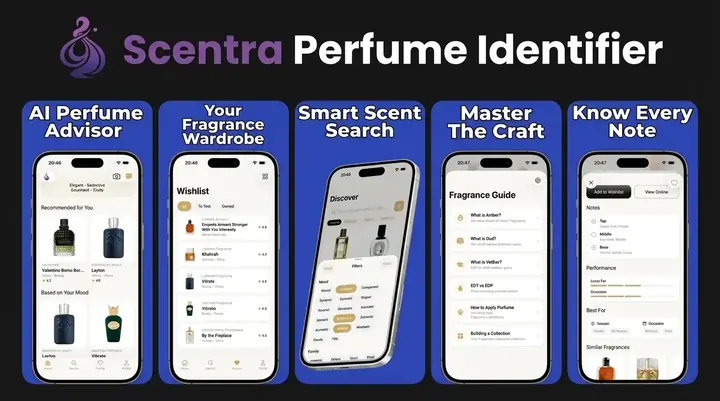
Yes. Camera-based identification can work through compatible mobile tools or upload interfaces. Scentra is one example of an iPhone tool that may be used to scan a fragrance bottle, with results still requiring visual verification.
A photo cannot detect aroma or chemical composition. Once a product is identified, a tool may display published notes associated with that fragrance, but it cannot determine whether the liquid inside is original, altered, or degraded.
Retake the image in even light, include the entire bottle, and add close-ups of the front, base, cap, and box. You can also search using any readable brand name, concentration, volume, barcode digits, or distinctive wording.
Explore perfume identification guides
Related tools, scanner apps, and fragrance learning resources
Scan a bottle from a photo
Identify bottles from photos
Find your signature scent profile
Top apps compared for 2026
Accuracy and limits explained
Camera-based bottle ID
No-cost options on iOS
When to use scanner vs search
Photo ID workflow