Fragrance Finder: Match a Scent Without a Bottle Photo
Describe what you enjoy, from fresh citrus to warm woods, and discover fragrances with a similar character.


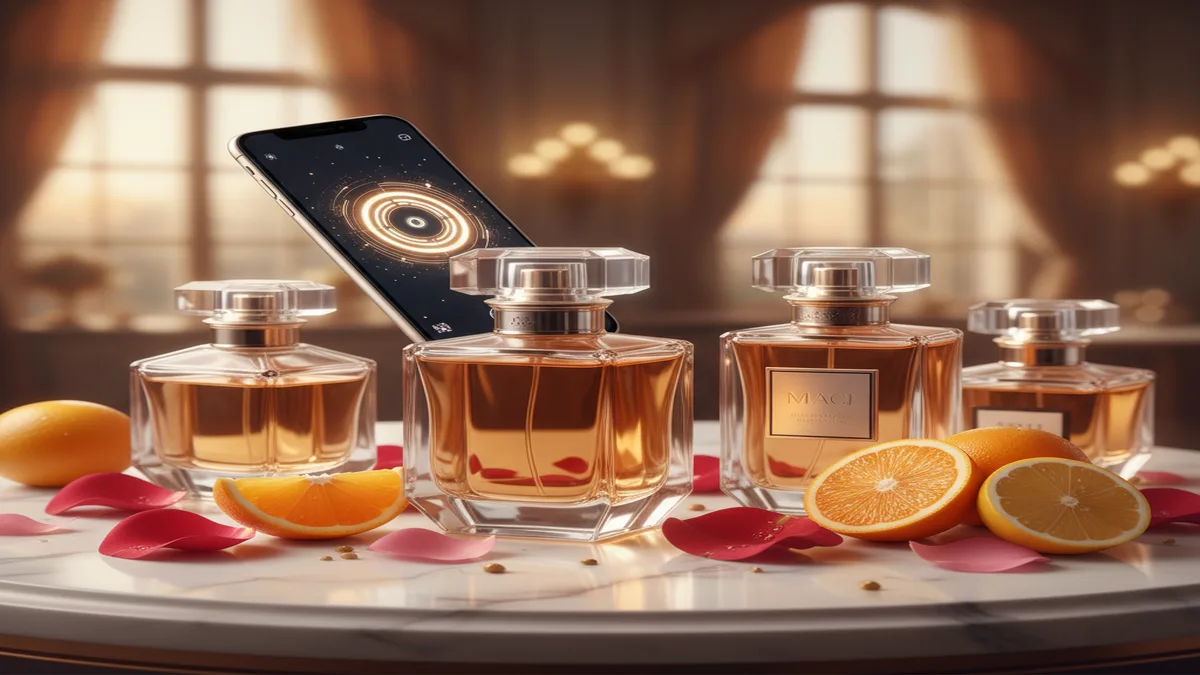
What a fragrance finder does
A fragrance finder translates your scent preferences into a shortlist of perfumes, even when you do not have a bottle photo or product name. It may use favorite notes, fragrance families, mood, occasion, season, strength, or examples of perfumes you already enjoy.
The results are recommendations rather than laboratory identifications. Published note lists can be incomplete, similar ingredients can smell different in separate formulas, and perfume develops differently on each person. A finder can narrow a large catalogue and reveal useful patterns, but it cannot guarantee an exact match, predict personal longevity, or replace testing the fragrance on skin.
Build a profile from the note pyramid
Start by describing the stages of a scent rather than searching for one isolated ingredient. The note pyramid is a practical model for organizing how a perfume changes from its opening to its dry-down, although transition times are approximate.
- Top notes create the first impression and often include citrus, herbs, or aromatic spices.
- Heart notes form the central character, with materials such as rose, jasmine, iris, or cardamom.
- Base notes linger longest and may include sandalwood, patchouli, vanilla, musk, oud, woods, or resins.
If you remember only one stage, say whether you loved the opening, main body, or lasting trail. That distinction produces more relevant matches.
Use fragrance families to improve matches
Fragrance families group perfumes by their dominant odor profile rather than by the order in which materials evaporate. Common labels include floral, woody, citrus, fougère, chypre, leathery, and oriental, also increasingly described as amber in some catalogues.
Choose one main family, then add contrasts or exclusions. For example, request a woody fragrance with a fresh citrus opening, or a floral scent without a sweet vanilla base. Include practical preferences such as subtle versus noticeable projection, daytime versus evening wear, and warm versus cool weather. Family names vary between retailers and databases, so treat them as navigation aids rather than fixed scientific categories. Descriptive words often provide the missing context.
What a perfume photo cannot prove
A photo may help recognize clear packaging, label text, bottle shape, or a visible batch code, but appearance alone cannot prove what the liquid contains. Counterfeit bottles can imitate authentic designs, packaging changes between releases, and flankers may use nearly identical bottles. Image quality, reflections, missing labels, and decanted samples create further uncertainty.
A photograph also cannot confirm storage conditions, reformulation, authenticity, concentration, age, or whether the contents match the container. It cannot reliably reveal notes, performance, or skin chemistry. Treat image-based identification as a lead that should be checked against readable text, purchase history, batch information, seller credibility, and the fragrance’s behavior when safely sampled.
Test and refine your shortlist
Reduce recommendations to a manageable group, then compare samples instead of buying solely from a generated match. Test one or two fragrances at a time and note the opening, heart, dry-down, projection, and comfort over several hours. Paper strips are useful for an initial comparison, while skin testing shows how the scent behaves for you.
- Record what you like and dislike at each stage.
- Separate note preferences from performance preferences.
- Retest on another day before deciding.
- Update the finder with specific feedback, such as too sweet, too smoky, or not long-lasting enough.
This feedback loop usually produces a more useful shortlist than repeatedly searching by a single favorite note.
Further reading: lensapp.io
Further reading: perfumeidentifier.com
When a Note-Based Fragrance Search Fails
A fragrance finder may struggle when your description relies on broad terms such as “fresh,” “clean,” or “sweet,” because many perfumes fit those impressions. Results can also be weak when you remember only the dry-down, confuse a prominent accord with a listed note, or search for a discontinued, reformulated, or limited-edition scent.
Instead of forcing a match, add another type of evidence:
- Recall where and when the perfume was purchased.
- Describe the bottle shape, cap, label, liquid color, or packaging from memory.
- Compare the opening, middle, and dry-down separately.
- Test a small shortlist on skin or blotters.
- Ask the wearer, retailer, or manufacturer to confirm older releases.
| Type | Typical oil % | Typical longevity |
|---|---|---|
| EDT | about 5–15% | about 3–5 hours |
| EDP | about 15–20% | about 6–8+ hours |
Frequently Asked Questions
Yes. Describe its dominant notes, overall family, sweetness, freshness, warmth, strength, occasion, and memorable dry-down. The result will usually be a shortlist rather than one certain identification.
Provide perfumes you already like, preferred and disliked notes, fragrance families, desired projection, season, occasion, and budget. Mentioning what you dislike can be as useful as listing favorites.
No. Notes describe perceived smells or creative effects. They do not necessarily identify individual raw materials, and an accord may combine several materials to suggest something such as leather, amber, or sea air.
Accuracy depends on the task and available information. Scanners may recognize visible packaging or text, while preference-based finders suggest similar scents. Neither method can confirm composition, authenticity, skin performance, or an exact match by itself.
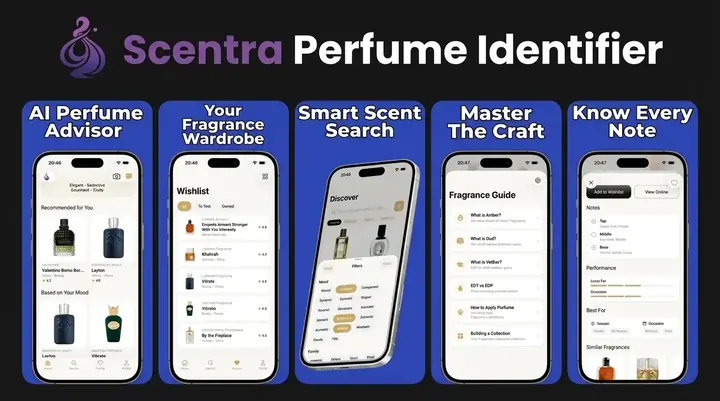
An iPhone tool can turn descriptive details into possible matches or scan readable packaging. Scentra is one example of an iPhone tool, but any result should be checked against official product details and, ideally, a sample.
Application amount, skin condition, temperature, humidity, perception, and the formula’s development can affect the experience. Recommendations compare scent profiles; they cannot fully predict personal wear.
Sample them under similar conditions and evaluate the opening, heart, dry-down, projection, longevity, and overall comfort. Avoid judging only from the first spray, because the longest-lasting stage may have a different character.
It can suggest possibilities, but one note usually produces a broad shortlist. Add the fragrance family, sweetness, intensity, season, approximate release period, and how the scent changed over time to improve the match.
Explore perfume identification guides
Related tools, scanner apps, and fragrance learning resources
Scan a bottle from a photo
Identify bottles from photos
Find your signature scent profile
Discovery tools ranked
AI suggestion apps
Decision support
Discovery workflow
Quiz-based matching
Easy first bottles