Similar Perfume Finder
Identify a fragrance and discover comparable scents based on notes, accords, and overall character.


What Is a Similar Perfume Finder?
A similar perfume finder is a search or scanning tool that suggests fragrances sharing notes, accords, scent families, or an overall style. You can typically enter a perfume name, describe the aroma, or upload a clear photo so the tool can identify a likely product before comparing it with alternatives.
Results are recommendations rather than guarantees. Listed notes do not reveal an entire formula, and two perfumes with similar descriptions may develop differently on skin. A finder also cannot promise identical projection, longevity, quality, or bottle authenticity. Use matches as a shortlist, then sample promising options whenever possible.
How Similar Fragrance Matching Works
Matching systems compare available fragrance information rather than reconstructing a secret formula. They may weigh prominent notes, fragrance family, accords, concentration, release information, and descriptions of the opening, heart, and dry-down.
- Note matching looks for shared materials or note descriptions such as vanilla, rose, citrus, woods, or musk.
- Accord matching compares broader impressions such as fresh spicy, amber, floral, powdery, or aquatic.
- Style matching considers mood, season, occasion, sweetness, intensity, and perceived gender positioning.
- Image recognition may first identify the bottle or packaging, after which database information is used to suggest alternatives.
The highest-ranked result is usually the closest documented match, not necessarily an exact smell-alike.
What a Photo Cannot Prove
A bottle photo can support visual identification, but it cannot establish what liquid is inside or how it smells. Similar bottles, reformulations, flankers, travel sizes, reflections, missing labels, and altered packaging can all cause identification errors.
- A photo cannot confirm authenticity, purchase history, storage conditions, or ingredient safety.
- It cannot reliably distinguish a genuine refill from substituted or diluted liquid.
- It cannot measure projection, longevity, concentration, batch variation, or skin performance.
- It cannot prove that two fragrances use the same formula merely because their note lists or packaging look alike.
For uncertain products, combine visual results with the exact name, concentration, batch details, seller information, and an in-person smell test.
How to Get More Relevant Matches
Better input produces a more useful shortlist. If scanning a bottle, photograph it upright in bright, indirect light and include the front label, cap, bottle shape, and box when available. Avoid glare, filters, clutter, and cropped text.
- Confirm the identified perfume, concentration, and flanker before accepting recommendations.
- State which stage you enjoy: opening, heart, or dry-down.
- Describe qualities you want to keep, such as creamy vanilla, clean musk, smoky woods, or sparkling citrus.
- Add constraints including budget, season, occasion, strength, and notes you dislike.
- Compare several suggestions and test them on skin over multiple hours.
This process helps separate genuine scent similarity from matches based only on one shared note.
Similar Perfumes, Dupes, and Counterfeits
A similar perfume, often called a dupe or clone, is independently sold under its own name and packaging while aiming for a comparable scent profile. Such products are generally lawful when they do not infringe trademarks, protected packaging, or other rights. Quality and resemblance can still vary substantially.
A counterfeit instead impersonates the original product by copying its brand name, logo, bottle, box, or other identifiers to deceive buyers. Counterfeits are illegal and may have uncertain origins or safety. A finder should recommend transparent alternatives, not products pretending to be the original.
- Choose clearly branded alternatives from traceable sellers.
- Be cautious of copied packaging, implausibly low prices, and claims of guaranteed identical formulas.
- Treat authenticity checks as separate from similarity matching.
Further reading: lensapp.io
Further reading: perfumeidentifier.com
Five Similarity Claims a Perfume Photo Cannot Verify
A perfume image can support visual matching, but it cannot verify sensory or commercial claims. Treat results as candidates to sample, not conclusions.
- The exact smell. Similar note lists can produce different effects because proportions, materials, concentration, and development vary.
- An identical formula. Packaging resemblance does not reveal the composition inside.
- True dupe accuracy. An inspired fragrance may capture the general character while differing in opening, texture, drydown, or longevity.
- Authenticity. A clear bottle photo cannot confirm provenance, batch history, storage, or whether the contents were replaced.
- How it will wear on you. Skin chemistry, climate, application, and time affect perception.
Use the image to narrow candidates, then compare concentration, release, note structure, and user descriptions. Sample on skin and revisit after the drydown before deciding how close a match really is.
- Honest limits of note-matching vs smelling
- Note-matching is not the same as smelling the real perfume. Two fragrances can list similar notes but still smell different because the overall scent depends on proportions, raw materials, concentration, and how the notes interact over time.
- A dupe can be recognizably similar while still missing parts of the original’s opening, drydown, texture, or longevity; several sources describe dupes as recreating the scent profile or general character, not perfectly copying the original.
Frequently Asked Questions
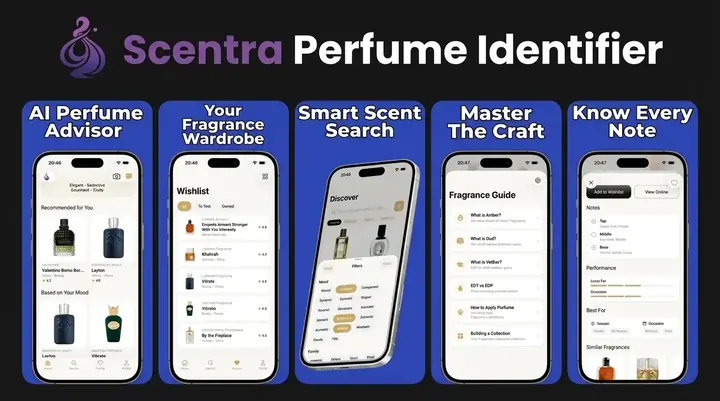
It may identify a likely bottle from visible branding, text, shape, or packaging. Clear images improve accuracy, but visually similar flankers and incomplete labels can lead to mistakes. On iPhone, Scentra is one example of a tool that can be used for perfume scanning and discovery.
Yes. Note lists are simplified descriptions, not full formulas. Ingredient quality, proportions, aroma chemicals, concentration, structure, and skin chemistry can make perfumes with similar listed notes smell noticeably different.
No. A transparent alternative uses its own brand, name, and packaging while offering a comparable scent. A counterfeit falsely presents itself as the original brand and copies protected identifiers to deceive buyers.
They are useful for ranking possibilities, but they are not objective guarantees. Accuracy depends on the available data, matching method, and whether similarity is based on notes, accords, user impressions, or the full development of the scent.
Not from an image alone. It may flag obvious packaging inconsistencies, but authenticity requires additional evidence such as seller provenance, batch information, packaging inspection, and evaluation of the liquid itself.
Longevity and projection vary with concentration, formula, application, climate, skin moisture, and individual perception. Two scents can have a similar character while differing greatly in strength or development.
Provide the exact perfume and concentration, the notes or stages you enjoy, preferred intensity, budget, season, occasion, and any materials you want to avoid. A clear bottle and box photo can help when the name is unknown.
Sampling is preferable. Test the fragrance on skin through its opening, heart, and dry-down, then assess comfort, performance, and overall resemblance before purchasing a full bottle.
Explore perfume identification guides
Related tools, scanner apps, and fragrance learning resources
Scan a bottle from a photo
Identify bottles from photos
Find your signature scent profile
Discovery tools ranked
AI suggestion apps
Decision support
Discovery workflow
Quiz-based matching
Easy first bottles